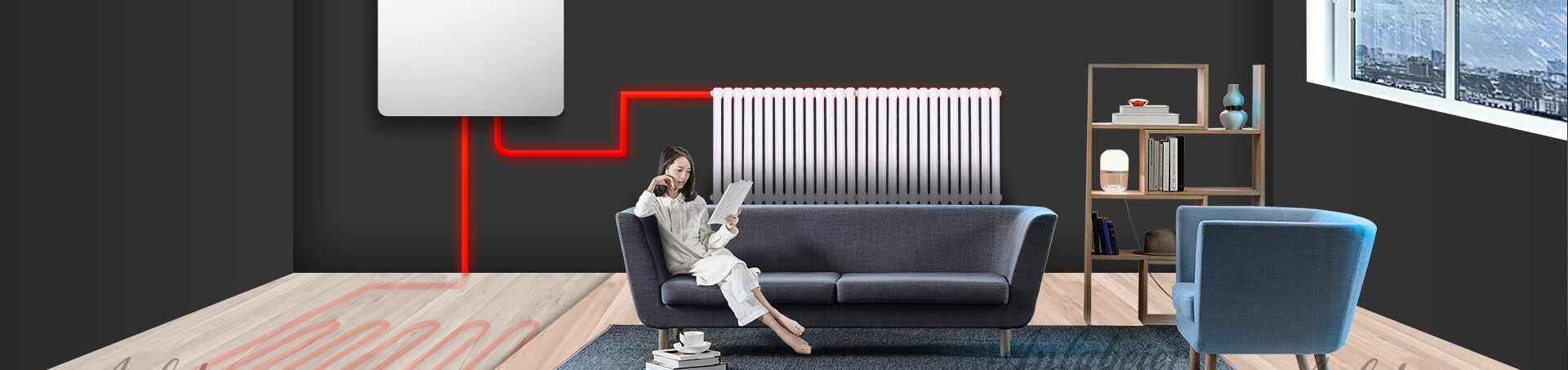
A tankless water heater isn't one-size-fits-all.
Space is your enemy. Every square foot counts.
A standard storage tank eats up roughly 60 × 60 cm of floor space. In a bathroom that's already tight, that's real estate you can't afford to lose.
An electric tankless unit mounts on the wall — about the size of a shoebox for a single-shower model. Even a whole-apartment unit is smaller than a briefcase. Mount it above the toilet, under the sink, or on any free wall.
What else matters in an apartment:
Recommendation: A 5–7 kW electric tankless unit, wall-mounted in the bathroom, single-shower use. Compact size, no tank footprint, standard circuit compatible.
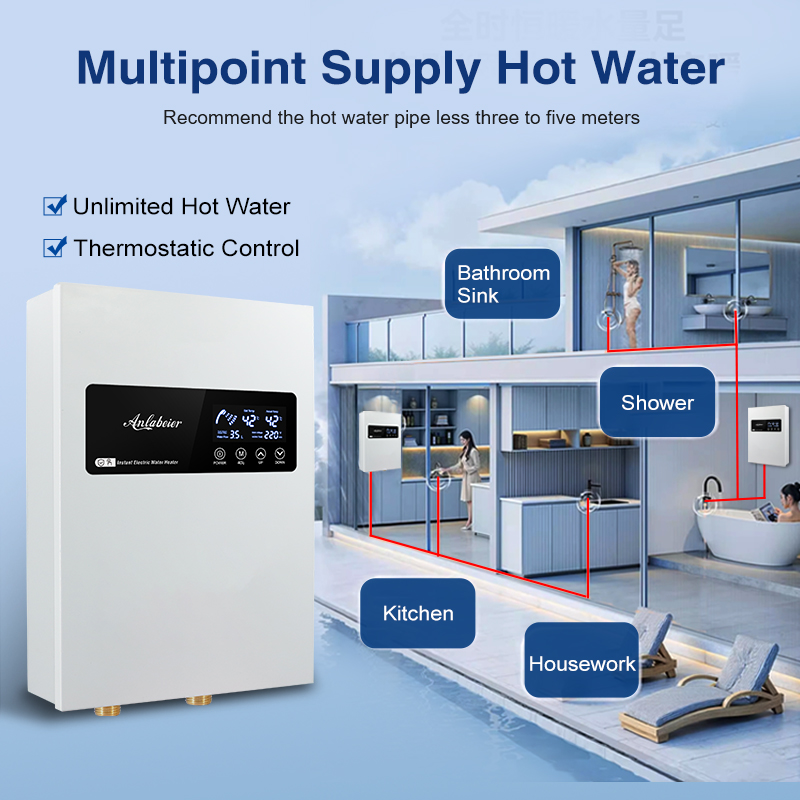
You have space. But you also have demand.
A villa with two or three bathrooms, plus a kitchen, means hot water may be running in three places at once. A single 6 kW unit won't cut it — that's enough for one shower, not a whole house.
You have two options here:
Option A: One larger unit per floor or zone. Install an 8–12 kW unit for each bathroom cluster. Each handles its own shower and sink. The kitchen gets its own smaller unit under the sink. This keeps hot water close to every point of use — no waiting, no heat loss in long pipe runs.
Option B: A single high-power whole-house unit. A 15–21 kW electric tankless can supply multiple outlets simultaneously — provided your electrical panel can handle 63–95 amps. In most homes, this means a three-phase power supply and serious electrical upgrades.
For most villas, Option A is more practical. It distributes the load, avoids a single point of failure, and doesn't require a commercial-grade electrical setup.
What else matters in a villa:
Recommendation: One 8–12 kW unit per bathroom zone, plus a 3–5 kW under-sink unit for the kitchen. Distribute, don't centralize.
Instant hot water — no waiting for a tank to heat up
Low electricity bills — especially if they pay utilities
Compact size — more bathroom space is a real selling point
Recommendation: A 5–7 kW tankless unit with rotary knob control, stainless steel heating element, and built-in ELCB. Wall-mounted, easy to replace, hard to break.
Anlabeier makes tankless electric water heaters across the power range — from compact 3.5 kW under-sink units to high-output 12 kW models.
Stainless steel and cast aluminum heating elements handle hard water without degrading. IPX4-rated housings fit tight bathrooms without splash risk. Built-in ELCB, dry-heating cutoff, and overheat protection work automatically — no tenant training required.
And with CE, CB, ETL, and RoHS certifications, every unit meets international standards whether it's going into a rental in Dubai, an apartment in São Paulo, or a villa in Manila.
One brand. Every scenario.
The right water heater isn't about what's popular. It's about what fits your walls, your wiring, and your life.
Apartment? Go compact, wall-mounted, 5–7 kW.
Villa? Distribute the load — one unit per bathroom zone.
Rental? Keep it simple, safe, and built to survive neglect.
Match the machine to the home, and it'll do its job quietly for years — no matter who's turning the knob.



Scan to wechat


 español
 English
 हिन्दी